Most people think catering is about food.
It’s not.
Food is just one part of it. What actually stays with guests is how the entire experience unfolds around it. How smoothly things move. How comfortable everything feels. How natural the transitions are between moments.
That’s where event catering essentials come in.
Because two events can serve the exact same menu, yet feel completely different. One feels organized, effortless, and enjoyable. The other feels slow, crowded, or slightly off without any clear reason why.
The difference is never just the food.
It’s how everything around the food is handled.
When catering is planned properly, it becomes invisible in the best way possible. Guests don’t think about waiting. They don’t think about where to go. They don’t notice delays or gaps. Everything just happens at the right time, in the right way.
But when even one part is off, it shows quickly.
Energy drops. Movement slows. Conversations get interrupted. The event starts to feel heavier than it should.
This is especially important in larger events where small inefficiencies multiply fast. What feels like a minor delay can affect the entire flow.
That’s why strong catering is not about adding more options or complexity.
It’s about getting the fundamentals right.
In this guide, we’re not going to talk about menus in a basic way.
We’re going to break down the five event catering essentials that actually define whether your event feels smooth, well-managed, and memorable from beginning to end.
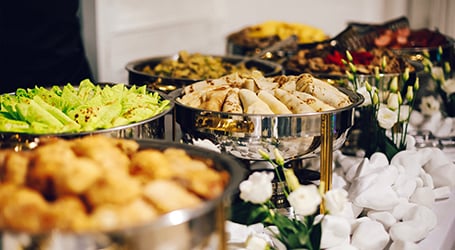
1. A Menu That Feels Right for the Event, Not Just Impressive on Paper
The first mistake most people make with catering is trying to impress.
They choose dishes that sound good, look premium, or feel “special,” but forget to ask one important question.
Does this actually fit the event?
Strong event catering essentials start with alignment, not variety. A menu should match the mood, timing, and energy of the event, not compete with it.
For example, a heavy, multi-course meal might sound impressive, but in a high-energy celebration, it can slow everything down. Guests feel full too quickly, movement decreases, and the overall atmosphere becomes quieter than intended.
On the other hand, food that feels too light or limited can leave guests unsatisfied, which creates a different kind of discomfort.
The balance matters.
A well-designed menu supports the event instead of interrupting it. It allows guests to enjoy the food without losing interest in what’s happening around them.
Another important factor is familiarity.
Guests don’t want to think too much about what they’re eating. When food feels approachable, they engage more naturally. When it feels complicated or unfamiliar, hesitation increases, and service slows down.
Portion control also plays a role.
Large portions can overwhelm guests, especially in longer events. Smaller, well-paced servings keep energy consistent and allow the experience to flow smoothly.
Timing connects everything.
Food should arrive when guests are ready for it, not when they’re still settling in or distracted by something else. When the timing is right, the entire experience feels effortless.
At places like Fabrizio Banquet Hall, menus are built around this idea. It’s not just about offering options, but about shaping a dining experience that fits the rhythm of the event.
Because in the end, the best menus are not the ones guests remember for complexity.
They’re the ones that feel exactly right for the moment.

2. Timing That Feels Natural, Not Scheduled
Good catering is not about when food is served.
It’s about when it feels right.
Most events don’t fail because of the menu. They feel off because of timing. Food arrives when guests are distracted, or too late when energy has already dropped. Either way, the experience loses momentum.
Strong event catering essentials rely on timing that blends into the event instead of interrupting it.
Guests should never feel like they are waiting for food.
And they should never feel like food is interrupting something important.
That balance is what keeps everything smooth.
The best events don’t announce every step.
They flow.
Guests finish one moment, and the next begins naturally. Food appears at the point where people are ready to pause, not when they are still engaged elsewhere.
Another important detail is pacing.
Serving everything too quickly creates pressure. Guests rush through meals, conversations shorten, and the event feels compressed. On the other hand, long gaps create frustration and break the rhythm completely.
Timing should stretch and compress slightly depending on the energy in the room.
Not every table finishes at the same speed. Not every guest is ready at the same time. Good catering adapts quietly without making it obvious.
This is where coordination becomes invisible but powerful.
Guests don’t notice perfect timing.
But they always notice when it’s wrong.
In a well-managed setup, food feels like part of the experience, not a separate process. It arrives, fits into the moment, and allows the event to continue without disruption.
And when timing feels natural, everything else becomes easier.
Because the event stops feeling like a schedule…
and starts feeling like a flow.
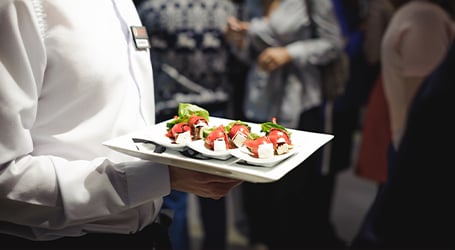
3. Service That Feels Attentive, Not Noticeable
Great service doesn’t draw attention.
It removes friction.
Guests shouldn’t have to look around for help, wait too long for assistance, or feel like they’re interrupting someone just to ask for something simple. When service is right, everything feels taken care of without effort.
That’s one of the most overlooked event catering essentials.
Service is not just about delivering food. It’s about reading the room.
Staff should move with awareness. They should know when to step in and when to stay back. Too much presence feels intrusive. Too little creates gaps.
The balance is subtle.
For example, clearing tables too quickly can make guests feel rushed. Waiting too long can make the space feel cluttered. The right timing keeps everything clean without interrupting conversations.
Another detail is consistency.
Every guest should have the same experience, no matter where they’re seated. Uneven service creates visible differences across the room, and that affects the overall impression of the event.
Communication also matters.
Guests shouldn’t feel confused about what’s being served or what happens next. Clear, simple interaction from staff keeps everything smooth without needing announcements or instructions.
Even small gestures make a difference.
Refilling drinks at the right moment. Noticing when someone needs assistance. Keeping pathways clear without being asked.
These are things guests don’t always point out.
But they feel them.
And that feeling shapes how the entire event is remembered.
Because when service works properly, it doesn’t stand out.
It disappears into the experience.
And that’s exactly what makes it powerful.

4. Presentation That Feels Intentional, Not Overdone
Before guests taste anything, they see it.
And that first visual moment quietly sets expectations.
Presentation is one of the most underestimated event catering essentials because people often confuse it with decoration. It’s not about adding more. It’s about making what’s already there feel considered.
When presentation is right, everything looks organized, clean, and easy to approach.
When it’s wrong, even good food can feel unappealing.
The key is restraint.
Overloaded tables, crowded displays, or too many elements competing for attention create confusion. Guests don’t know where to look or where to start. The setup feels heavy instead of inviting.
On the other hand, a well-structured presentation guides the eye naturally.
Food is placed with space around it. Serving areas are easy to understand. Nothing feels hidden or difficult to access.
Height variation also plays a role.
Flat setups can feel dull, while slight elevation differences create depth and make everything easier to navigate visually.
Lighting matters here too.
Not in a dramatic way, but enough to ensure that food looks fresh and clearly visible. Poor lighting can take away from even the best presentation.
Another important detail is cleanliness.
This sounds obvious, but it’s often overlooked during busy events. Small things like spills, cluttered serving areas, or unorganized stations quickly affect perception.
Presentation should feel effortless.
Not like something guests have to figure out.
When done right, it enhances the experience without demanding attention. Guests move naturally, serve themselves easily, and stay engaged without interruption.
Because in the end, presentation isn’t about impressing.
It’s about making everything feel simple, clear, and intentional.
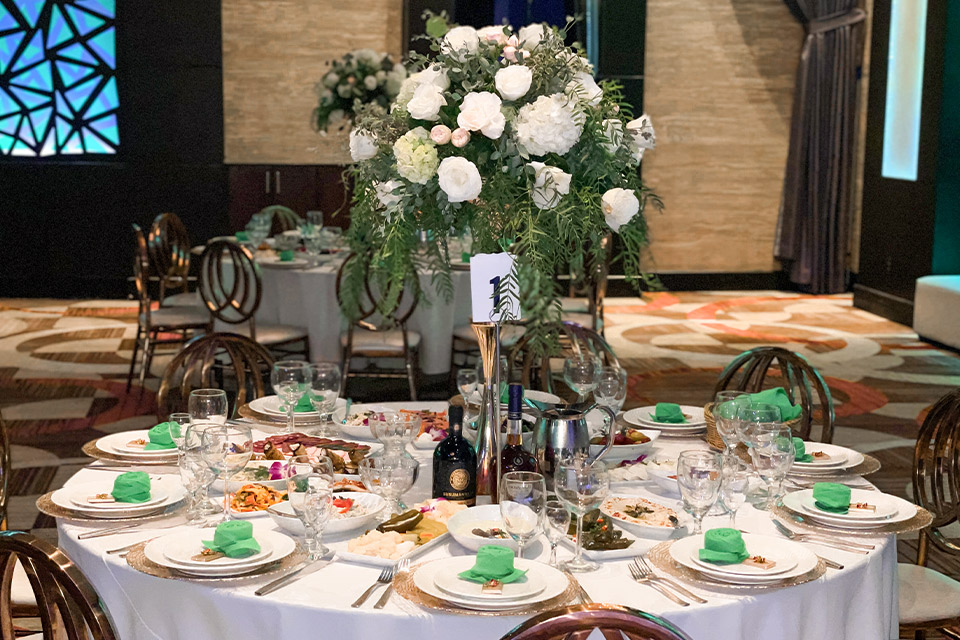
5. Accessibility That Feels Effortless, Not Managed
The final piece of great catering isn’t what you serve or how it looks.
It’s how easily guests can interact with it.
Accessibility is one of the most ignored event catering essentials, yet it directly affects comfort, movement, and overall satisfaction. If guests have to think about how to get food, where to go, or when it’s their turn, the experience already feels heavier than it should.
Everything should feel obvious.
Guests should be able to approach, serve, or receive food without hesitation. No long lines forming in one spot. No confusion about where stations begin or end. No need to ask basic questions.
Flow matters here.
If too many people gather in one area, the space becomes congested quickly. This slows everything down and creates unnecessary pressure. A well-planned setup spreads activity naturally across the room, allowing movement to stay smooth.
Placement is key.
Food stations should be positioned where guests can access them without crossing through main walkways or interrupting other parts of the event. When paths stay clear, the entire environment feels more open and controlled.
Another important detail is pace.
Not every guest moves at the same speed. Some take their time, others move quickly. A strong setup allows both without creating delays or discomfort.
Even small improvements make a big difference.
Clear spacing, logical positioning, and easy access remove the need for instructions. Guests don’t feel managed. They feel free to move at their own rhythm.
And that’s the goal.
Because when accessibility is handled properly, catering stops feeling like a process.
It becomes part of the experience.
Conclusion
When everything is planned the right way, catering stops feeling like a separate part of the event.
It becomes the experience.
In Las Vegas, where expectations are naturally higher, this level of detail matters even more. Guests don’t just notice what is served. They notice how smoothly everything happens, how comfortable the environment feels, and how naturally the entire dining experience fits into the event.
That is exactly what sets Fabrizio Banquet Hall apart.
Catering here is not treated as a basic service. It is designed as part of the overall event flow. From customizable menus to multiple dining styles like buffet, family-style, table service, and hors d’oeuvres, everything is built around flexibility and guest experience.
The focus stays on quality, consistency, and timing.
Dishes are prepared with fresh ingredients, service is coordinated with the event schedule, and the entire setup is structured to feel smooth without interruptions.
Instead of managing separate elements, everything works together in one place.
That means less stress, better flow, and a more refined experience for both you and your guests.
Because in the end, great catering is not just about food.
It is about how effortlessly everything comes together.